





Advanced Astro Filter Options
(Drop-ins, Clip-ins, and Screw-on filter options for advanced astrophotography)
There are many different options for external filters that can be used and can increase the quality of any astrophotography image. This page will explaine some of the different filters available and will show how they can increase the quality of your images. Som filters are available as a Clip-in option, some as a Drop-in option, and some are only availabkle as a screw-on. Most screw-on filters are only available in a 48mm or 2 inch size. This can limit their use to Telescope and Deep Sky imaging.
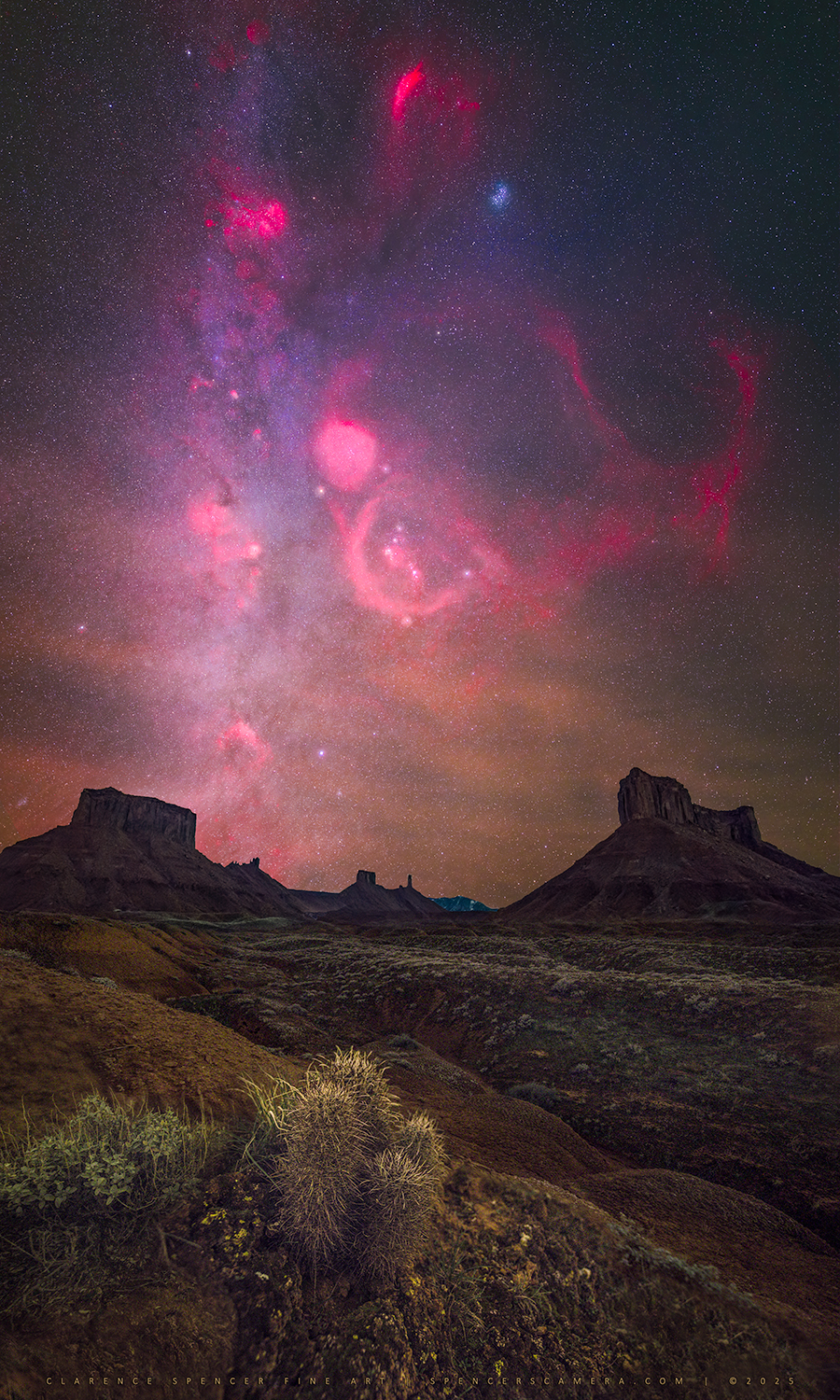
Image captured using a Visible + H-Alpha AstroModified Canon EOS R5 Mark II, Sigma Art 14mm lens. The sky is a composite of 3 images using three different filters. Approximately 10 images used for each filter for a total of 30 images to compile this result. More to be explained below. A Benro Polaris StarTracker was used for longer exposures depending on the filter used.
The intent of this page is to show direct image comparisons of a Normal Camera, a Visble + H-Alpha AstroModified Camera, and the effects of using advanced astronomy filters when using a modified camera.
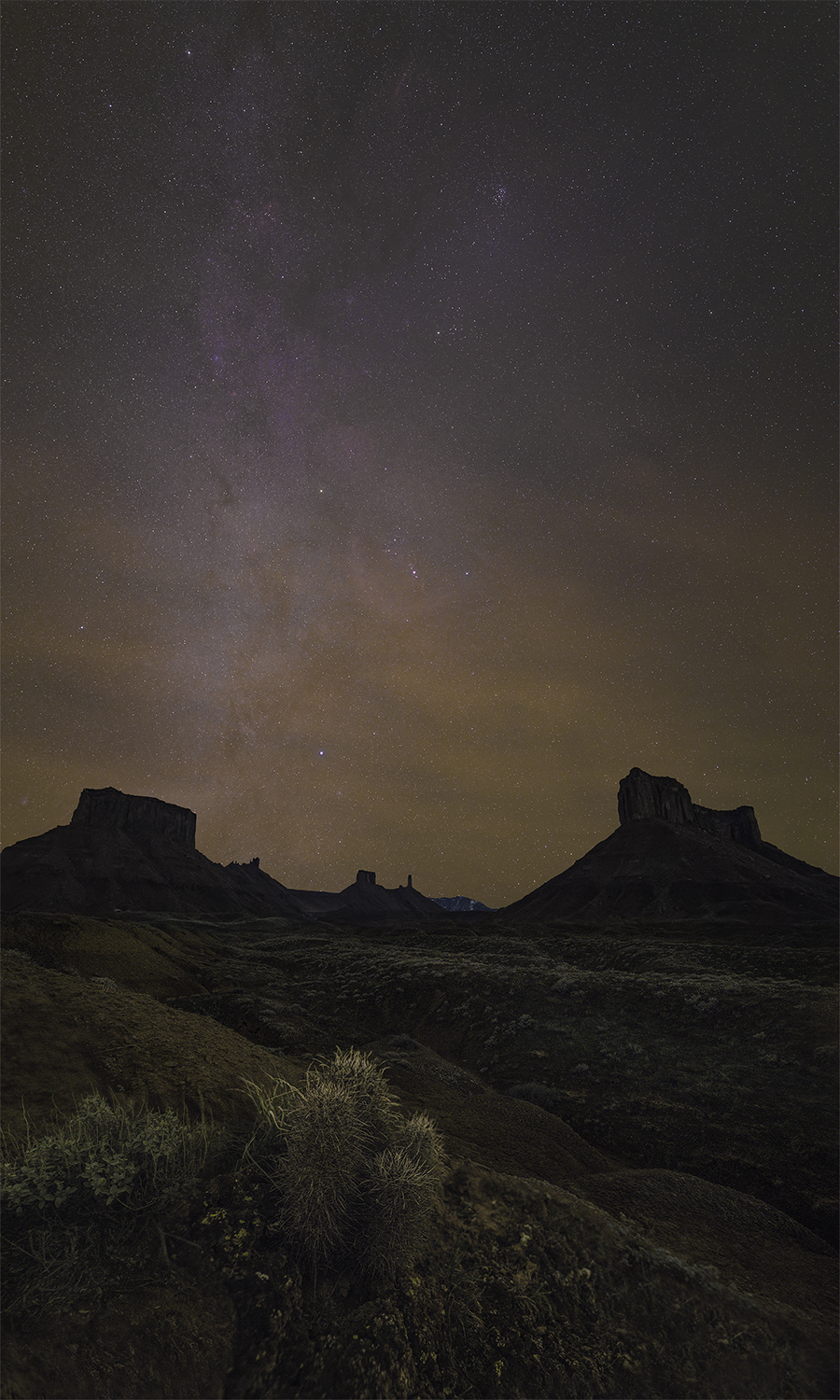
Image captured using an UnModified (Regular) Canon EOS R5 Mark II, Sigma Art 14mm lens, no filters used. All images for this comparison where captured using the same camera model. The remaining images were captured usoing a Visble + H-Alpha Astromodified Canon EOS R5 Mark II. Only the external filter combinations were changed.
Visible + H-Alpha Filter (420nm - 680nm) - The Nightscaper/Night Landscape and Milky Way shooters favorite!: This filter choice is the favorite choice of most experienced Nightscape shooters (Landscape at night and Milky Way images). This filter is best when installed internally inside the camera during the modification process. External Narrow Band filters (Clip-in, Drop-in and Screw-on) can be used with a Visible + H-Alpha modified camera with great results. Our Visible + H-Alpha filter will allow your camera to capture true color images with more transmission of the H-Alpha range than an unconverted camera while capturing the visible spectrum as well. Colors will remain natural and overall luminance is noticeably increased. (This filter option is more sensative to H-Alpha than the OEM filter used in the Canon EOS Ra and will allow your camera to capture even more luminance, colors, light transmission and wavelengths, including H-Alpha.) The Visible + H-Alpha filter has a sharp cutoff at 680nm which allows imaging in the most popular narrow band ranges including: Hydrogen Alpha (H-Alpha), Sulpher II (S-II) Oxygen III (O-III), Nitrogen I (N-I), and Hydrogen Beta (H-B). Also, this filter is manufactured from the highest quality polished and coated material. All our filters are anti-reflective coated and polished to scientific microscopic image quality standards insuring flawless imaging under extreme magnifications. The following image was captured using a Visible + H-Alpha Modified camera only. No other filters were used.
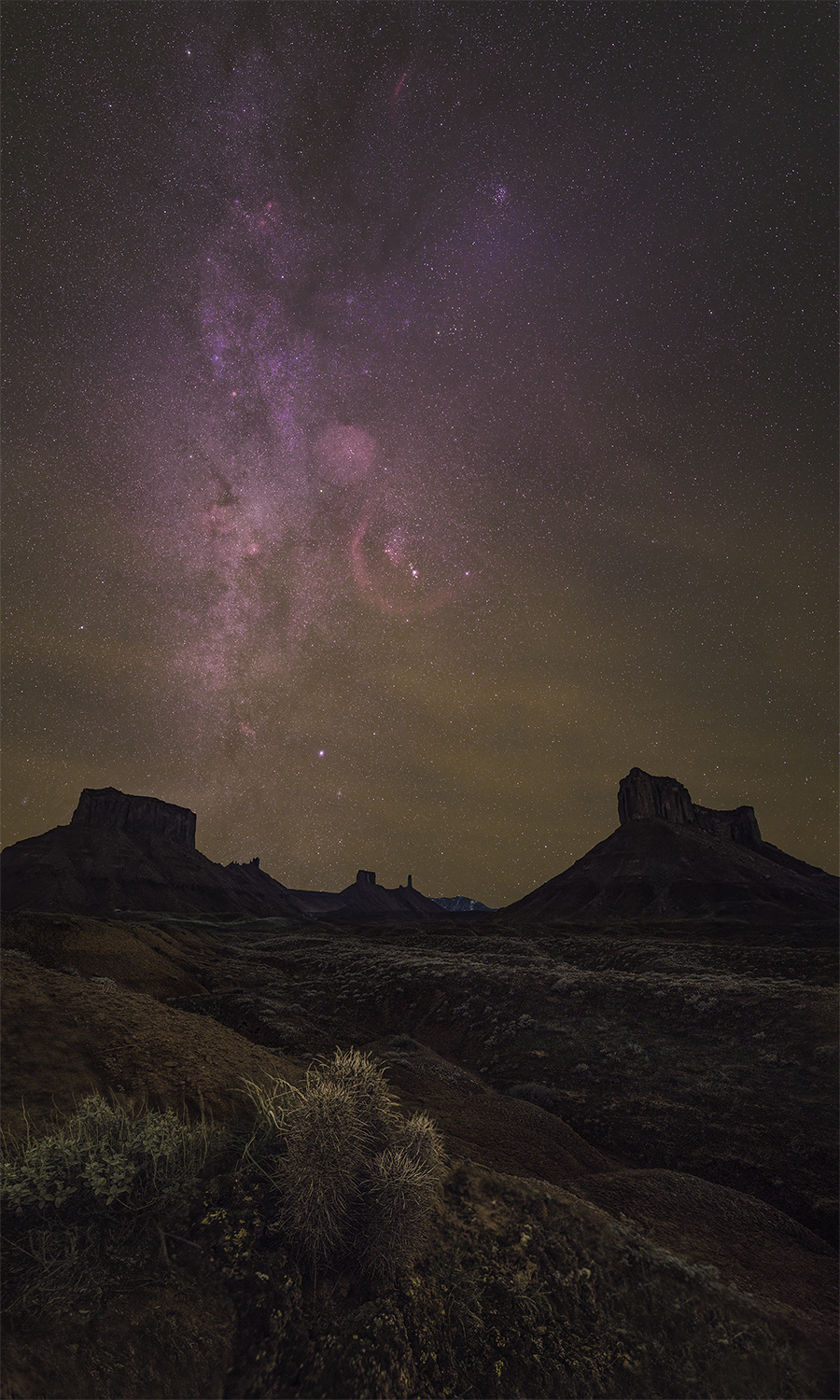
Image captured using a Visible + H-Alpha AstroModified Canon EOS R5 Mark II, Sigma Art 14mm lens, no additional filters used. All images for this comparison where captured using the same camera. Only the external filter combinations were changed.
(The Visible + H-Alpha filter is available as a Canon Drop-in Version here.)
(The Visible + H-Alpha filter is also available as an Clip-in Version here.)
(The Visible + H-Alpha filter is also available as an On-Lens Version here.)
Narrow Band H-Alpha Only Filter - One of the more popular external filters used by astrophotographers today is a Narrow Band H-Alpha only filter. This filter only allows a narrow amount of H-Alpha light to pass through and reach the imaging sensor of the camera which amplifies the Reds produced by emission nebulae, therefore creating more POP in the reds found in the night sky. The following image was captured using the same Visble + H-Alpha Astromodified Canon EOS R5 Mark II as well as a 3nm Narrow Band H-Alpha Only Drop-in Filter. This filter is available in various wavelengths and sensitivities, including 3nm, 6nm, and 12nm. Most shooters prefer the ease of using the 12nm as it is easier to find focus stars. The more narrow the sensitivity the harder it is to find a focus star. We personally prefer using a 6nm or even a 3nm extreme narrow band version because it produces a more detailed result. Narrow band H-Alpha only filters are available as a Canon Drop-in, Clip-in and 48mm screw on versions.
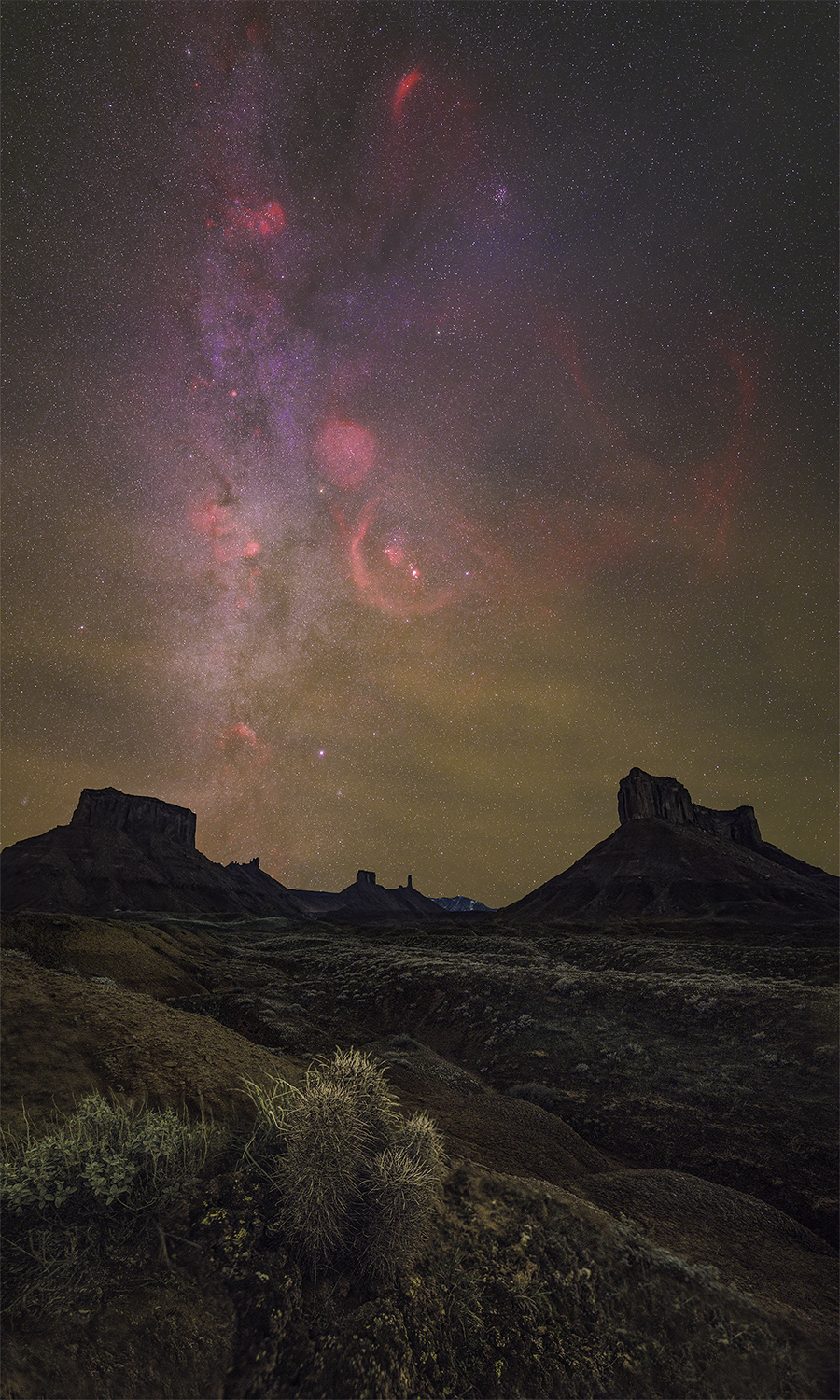
Image captured using a Visible + H-Alpha AstroModified Canon EOS R5 Mark II, Sigma Art 14mm lens. The sky is a composite of 2 images using two different filters, the internally installed Visible + H-Alpha filter as well as a 3nm narrow band H-Alph Only Drop-in filter. Approximately 10 images using each filter for a total of 20 images was used to compile this result. The reds are more prominant in this image due to the added H-Alpha layering. A Benro Polaris StarTracker was used for longer exposures when using the Narrow Band H-alpha Only filter.
(The 3nm Narrow Band H-Alpha filters are available as a Canon Drop-in here.)
(The 3nm Narrow Band H-Alpha filters are available as a 48mm screw-on here.)
(The 12nm Narrow Band H-Alpha filters are available as a Clip-in here.)
(The 6nm Narrow Band H-Alpha filters are available as a Clip-in here.)
Dual-Band Filter - A Dual-Band filter allows the camera sensor to capture only two types of light, H-Alpha and Oxygen III. This will reveal more reds produced by emission nebulae as well as the blues found in other areas of the night sky. Some shooters prefer this filter as it produces, in their opinion, a more pleasing color balance. Dual-Band filters are available only as a Canon Drop-in and 48mm screw on versions.
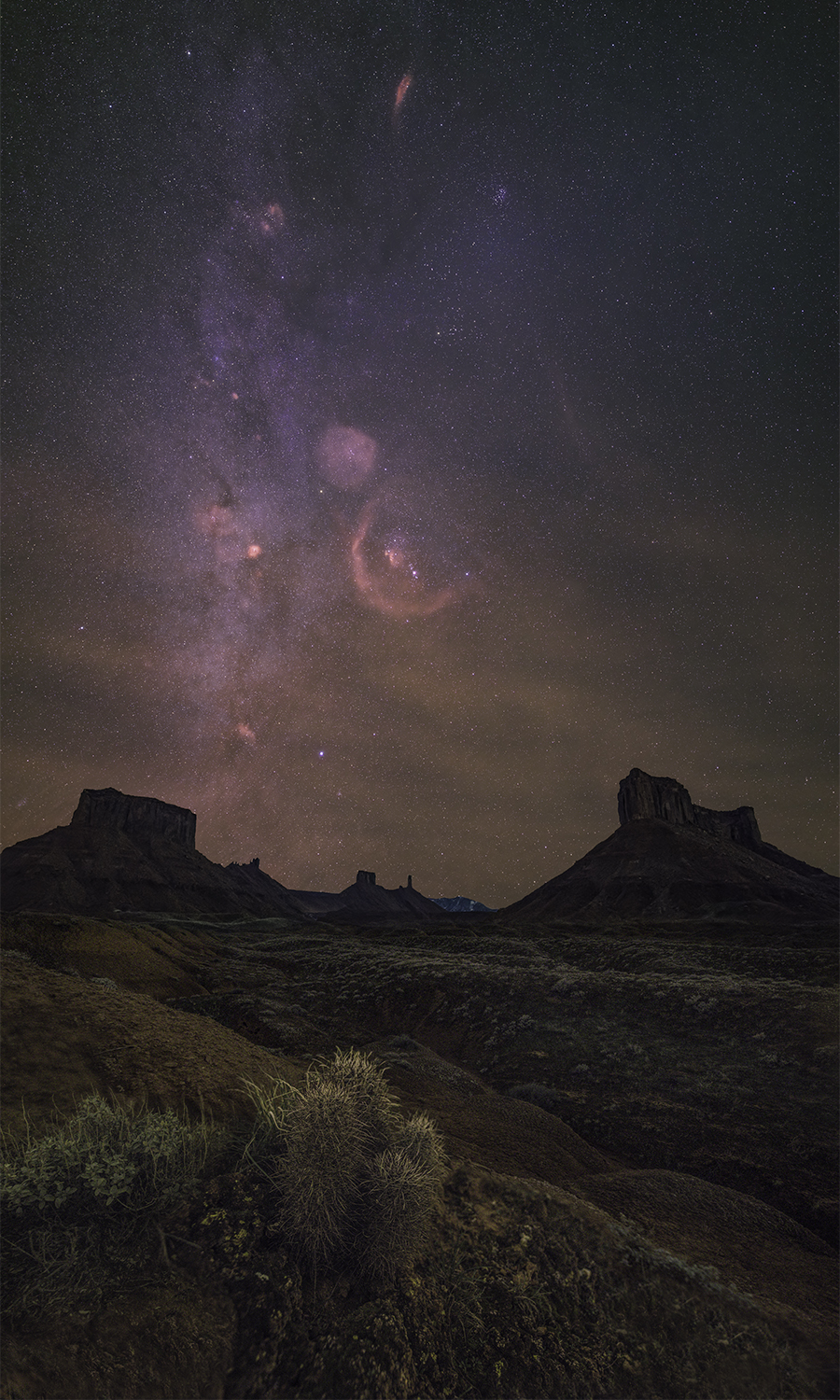
Image captured using a Visible + H-Alpha AstroModified Canon EOS R5 Mark II, Sigma Art 14mm lens. The sky is a composite of 2 images using two different filters, the internally installed Visible + H-Alpha filter as well as a Dual-Band Canon Drop-in filter. Approximately 10 images using each filter for a total of 20 images was used to compile this result. The reds and Blues are more prominant in this image due to the added H-Alpha and Oxygen III layering. A Benro Polaris StarTracker was used for longer exposures when using the Narrow Band H-alpha Only filter.
(The Dual-Band filter is also available as a Canon Drop-in Version here.)
(The Dual-Band filter is also available as a 48mm Screw-on version here.)
Combining Multiple Filters for better results - By capturing multiple images using different filters and then combining them as selective and targeted layers you can produce better results and amplify areas of the image. This can produce a more pleasing, detailed and balanced result. A Dual-Band filter allows the camera sensor to capture only two types of light, H-Alpha and Oxygen III. This will reveal more reds produced by emission nebulae as well as the blues found in other areas of the night sky. The following image was captured using a Visible + H-Alpha Modified Canon R5 Mark II, a 3nm H-Alpha Narrow Band Canon Drop-in filter as well as a Dual-Band Canon Drop-in filter.
Image captured using a Visible + H-Alpha AstroModified Canon EOS R5 Mark II, Sigma Art 14mm lens. The sky is a composite of 2 images using three different filters, the internally installed Visible + H-Alpha filter, a Narrow band 3nm H-alpha Only filter as well as a Dual-Band H-Alpha and Oxygen III Drop-in filter. Approximately 10 images using each filter for a total of 30 images was used to compile this result. The reds are much more prominant as well becasue of the aditional layering of H-Alpha. A Benro Polaris StarTracker was used for longer exposures when using the Dual-Band filter. Additional editing performed using PixInsight, Adobe Camera RAW and Adobe Photoshop, as well as other editing programs. The editing techniques that were used are taught during all of our photo workshops.
Testimonials:
Clarence:
Wow, working with you is just like working with my crew space support group at NASA. I love working with can-do people. Thanks for the follow up info here. It all looks good to me and I know we will put together the best camera produced. It is a pleasure to work with such dedicated people. Let me know if you have any issues/questions in dealing with NASA.
Again, it is a pleasure to be working with you.
Don Pettit (PH.D.)– NASA Astronaut
ISS Expedition 6 Crew Member; Space Shuttle STS-126 Crew Member; Current ISS Expedition 30 and 31 Crew member.
http://www.jsc.nasa.gov/Bios/htmlbios/pettit.html
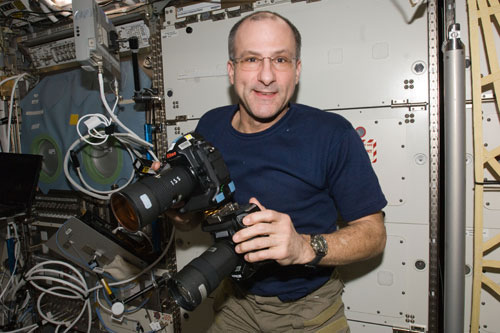
NASA/International Space Station Astronaut Don Pettit works with two still cameras mounted together, one of which is an infrared modified still camera, modified by Spencer's Camera & Photo of Alpine, Utah. Photo credit: NASA
Dear Clarence,
I got a standard Sony NEX-5 camera and found it’s a single shot colour images quite good. However I was not satisfied with the red colour spectrum in the deep space images and decided to get a conversion done.
It was a pleasure to deal with Spencer’s Camera and my new kit arrived quickly. What a difference it made! The colours are rich and there is less visible noise.
Thanks for the high quality service!
Alex Cherney
Amateur astronomer and photographer
http://www.terrastro.com
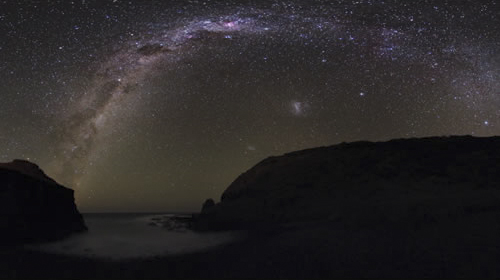
Image Copyrighted - Alex Cherney 2011


